
Menopause: Changes, Skincare & Treatments
One of the more bewildering things about menopause is how quickly familiar skin can begin behaving like someone else’s. A moisturiser you have used for years suddenly is not rich enough. Foundation settles into places it never used to. Your cheeks flush more easily, your neck feels dry and, just as you are adjusting to all of that, a spot appears on your chin with the timing and confidence of a teenager.

These changes are real - and you can read more about them in one of my blog posts here. Oestrogen receptors are found throughout the skin and, as hormone levels fluctuate during perimenopause and then decline, the skin produces less collagen, holds water less effectively and takes longer to repair itself. Every woman’s experience will be different, of course. Genetics, sun exposure, smoking, stress and general health all influence what happens next. However, understanding the hormonal part of the picture does make it much easier to choose skincare and treatments that are genuinely useful.
What does oestrogen do for the skin?
Oestrogen supports many of the processes that keep skin strong, supple and well hydrated. It influences collagen production, skin thickness, elasticity, blood flow and the natural oils that maintain its protective barrier.
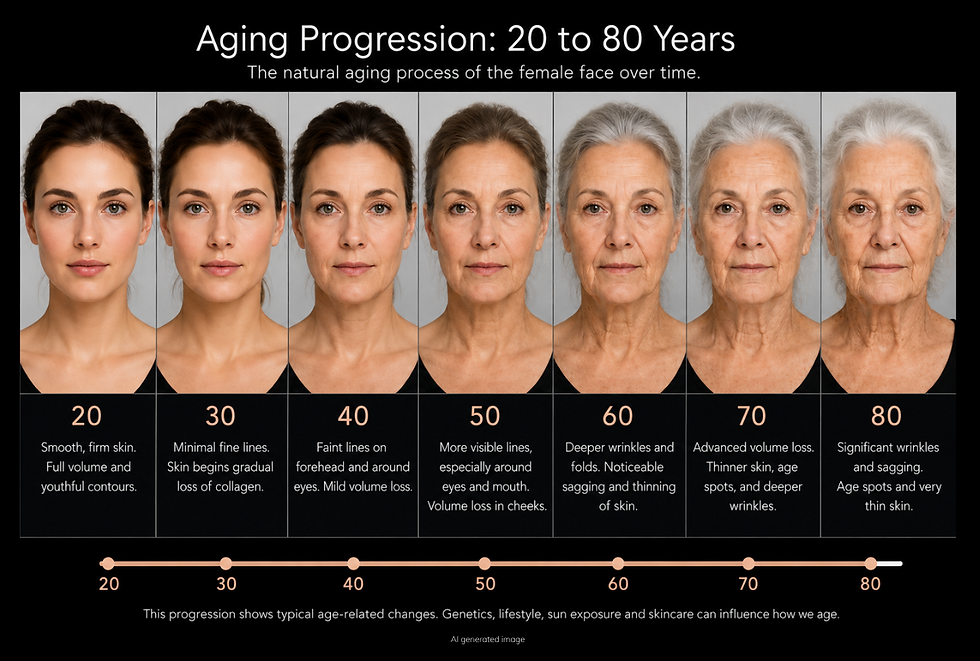
When levels fall, the skin may produce less sebum and lose water more readily, leaving it dry, tight or itchy. Cell turnover and healing can slow, while declining collagen and elastin make fine lines more visible and the skin feel thinner or less firm.
You may have seen the claim that we lose 30 per cent of our skin collagen during the first five years after menopause. This is an estimate rather than a prediction for every woman, but research does suggest that collagen loss accelerates significantly around this time before continuing more gradually afterwards. And this partly explains why the change can feel abrupt. You did not neglect your skin and suddenly “age overnight”. A biological support system that had quietly been doing a great deal of work has changed.
What are the common signs of menopausal skin?
Dryness is often the first thing women notice. Skin that once tolerated foaming cleansers, acids and lightweight lotions may begin to feel uncomfortable after washing. Make-up can become patchy and fine lines look deeper. The skin barrier may also become less resilient as products start to sting, redness takes longer to settle and exfoliating acids, retinoids and strong serums can produce inflammation rather than radiance.
Changes in collagen gradually affect firmness, particularly around the lower face, jawline and neck. Shifts in facial fat and bone also contribute to the change in contour, which is why a more expensive moisturiser cannot lift a jowl or replace lost structural support. Some women experience more flushing or find that existing rosacea becomes harder to manage. Pigmentation accumulated through years of sun exposure may become more apparent. Then there is menopausal acne, which feels particularly unfair when it arrives alongside dryness.
The best skincare routine for menopausal skin
Menopausal skincare does not need to contain the word “menopause” on the bottle. That is a marketing category, not an ingredient. The best routine is built around what your skin is doing now. If it has become dry and reactive, restoring the barrier takes priority. Pigmentation calls for consistent sun protection and carefully chosen active ingredients, while acne-prone skin needs a different balance again.
For many women, a simpler skincare routine - used consistently - will achieve far more than several powerful products competing for space on the same face.
1: Choose a gentle cream, lotion or low-foaming cleanser that removes make-up and sunscreen without stripping away the skin’s protective oils. Use lukewarm water and notice how your face feels afterwards. That squeaky-clean sensation is not evidence of a particularly thorough job. It usually means the cleanser has removed more oil than your skin can readily replace.
2: Hyaluronic acid attracts water, but dry menopausal skin often needs more than a hydrating serum. Ceramides, glycerin, squalane and fatty acids can help soften the skin and reinforce the barrier that keeps moisture in. Apply moisturiser while your skin is slightly damp. If your usual product no longer lasts through the day, try a richer cream rather than continually adding more serums. And drinking enough water supports general health, but a damaged skin barrier cannot be repaired from a water bottle alone.
3: Daily broad-spectrum SPF remains the most useful long-term anti-ageing product available. Ultraviolet exposure breaks down collagen, worsens pigmentation and places further stress on skin that is already becoming thinner. Choose an SPF 30 or higher that feels comfortable enough to use generously. Continue through autumn and winter because UVA, the wavelength strongly associated with premature skin ageing, is present throughout the year and passes through window glass.
Can you still use retinol during menopause?
In many cases, yes. Retinoids have strong evidence for improving fine lines, uneven tone and texture by encouraging cell turnover and supporting collagen production. But they can also cause dryness and irritation. Begin with a small amount once or twice a week, increase only when your skin is comfortable and keep the rest of your routine gentle. Applying moisturiser before or after a retinoid can make it easier to tolerate. If your face becomes sore, persistently red or begins peeling, stop and allow the barrier to recover. Irritation is a side effect, not proof that the product is working harder.
What about vitamin C, niacinamide and peptides?
Vitamin C may help with brightness and uneven pigmentation, although strong acidic formulations can irritate sensitive skin. Niacinamide can support the barrier and may be useful when inflammation or oiliness is also present. Peptides are frequently marketed as though they can rebuild the face from the bathroom shelf. Some may support hydration and skin function, but the evidence varies between products. They are an optional addition rather than a substitute for sunscreen or a well-tolerated retinoid.
Introduce one new active product at a time. Otherwise, if your skin reacts, you will have no idea which beautifully packaged bottle caused the trouble.
Which professional treatments help menopausal skin?
There is no single “menopause facial” capable of correcting every hormonal skin change. The right treatment depends on the problem you want to improve and how your skin behaves during assessment. At my Worcester clinic, I consider skin quality, pigmentation, texture, facial volume and laxity. These changes frequently overlap, but they do not all respond to the same treatment.
For dullness, uneven tone and pigmentation: A professional chemical peel can remove damaged surface cells and encourage a fresher, more even appearance. Its formulation and strength must suit the skin in front of us, particularly when the barrier has become reactive. Sun protection afterwards is essential. Treating pigmentation while continuing to expose the skin to UV light is rather like repainting a wall while the roof is still leaking. Our VISIA skin analysis can also reveal pigmentation, redness and sun damage that may not yet be obvious on the surface, helping us plan treatment more accurately.
For fine lines and changes in texture: Microneedling creates controlled micro-injuries that prompt a healing response and new collagen formation. It can help improve fine lines, enlarged pores, mild scarring and general skin texture. At the clinic, it can be combined with Calecim Professional Serum to support recovery and regeneration. Results develop gradually as collagen remodels during the weeks following treatment.
For loss of firmness: Morpheus8 combines microneedling with radiofrequency energy delivered at selected depths. It can address texture and mild to moderate laxity by stimulating collagen within the deeper layers of the skin. When loose skin beneath the chin or loss of jawline definition is more pronounced, Quantum10 FaceTite offers a minimally invasive option between surface treatments and surgery. It uses radiofrequency beneath the skin to contract tissue and encourage longer-term collagen remodelling. These treatments is suitable for everyone. Significant excess skin may require a surgical discussion, and an honest consultation should establish what degree of improvement is realistically possible.
For facial volume changes: Menopause coincides with changes in facial fat, bone and soft-tissue support. These may appear as flattening through the cheek, deeper shadows around the mouth or a face that looks tired even after a reasonable night’s sleep. Carefully placed dermal filler can restore support or soften a particular hollow in suitable patients. Filling every line, however, can leave the lower face looking heavier. Conservative treatment depends on understanding which volume has been lost and which changes are actually caused by skin laxity.
The skincare routine that suited you at 35 may stop working at 48 or 55. That is not a failure on your part, and it does not mean you need ten stronger products or a dramatic course of treatment. Menopause alters the skin, but it does not erase its ability to repair, respond and improve - the useful question is how best to support the complexion you have now.
At Dr Julia Sen Health & Wellness in Worcester, we can assess your skin, review your current routine and recommend skincare or treatment according to your concerns.


Comments