
Why Our Social Energy Changes As We Age
If you’re anything like me, there was a time when you could do it all. The endless dinners, drinks and nights out. I was the one who always remembered birthdays (and invariably baked the cakes) and stayed until the end of the party. I was the organiser; I made things happen and held friendships together without even thinking about it.

Now in midlife, one busy evening can feel like enough. Not because I can’t cope – more that I know I’ll enjoy it, but I also know I’ll need recovery time afterwards. That awareness can feel uncomfortable at first. If you’ve always been the one who showed up, it’s easy to interpret the change as becoming less social. But something else is going on.
Long-running research into personality across the lifespan shows a consistent pattern: traits linked to high social stimulation, particularly aspects of extroversion like sensation-seeking and social dominance, tend to decline gradually with age. It doesn’t mean we stop liking people, it means our relationship with social energy changes.
As our appetite for noise, novelty and constant interaction softens, so does the need to host, lead or carry the momentum of a room. Instead, we become more attuned to emotional depth and more aware of how we feel in certain company. We’re less willing to spend time in spaces that leave us drained, even if they once felt normal. It’s not that we don’t want connection. It’s that we no longer want all of it.
Why This Shift Happens
A useful way to understand this comes from psychologist Laura Carstensen’s Socioemotional Selectivity Theory, developed at Stanford University. Her research shows that our perception of time plays a central role in shaping our priorities. When we’re younger, time feels open-ended. We’re naturally drawn to exploration - new people, new experiences and wider social circles.
As we age, we shift focus from knowledge acquisition to emotional satisfaction. Consequently, older adults prioritise positive emotions, deeper relationships and improved wellbeing by narrowing their social networks to meaningful connections. In other words, less social doesn’t mean less fulfilled. It often means more intentional.
The Part That’s Often Misunderstood
From the outside, declining plans or not replying to messages the moment they ping can look like withdrawal. And sometimes, it is. Persistent loss of interest in socialising can be a sign of low mood or conditions such as depression, particularly if it comes with fatigue, low motivation or a sense of disconnection.
But often, it’s something far healthier. Psychologists sometimes refer to this as selective social investment – a natural shift towards relationships that feel reciprocal, supportive and emotionally meaningful. When this shift is healthy, time alone feels restorative rather than heavy. You still enjoy being with people, but you’re far more aware of which relationships energise you and which ones deplete you.
There’s also a physiological piece to this that we don’t talk about enough. As we get older, our nervous system becomes less tolerant of sustained stimulation and recovery can take longer. Add in midlife factors like hormonal changes, work demands or caring responsibilities, and what once felt effortless can start to feel like something you have to budget energy for.
A More Honest Way of Living
For many women, this stage brings an unexpected honesty. You begin to realise how much of your earlier social life was driven by habit, expectation, or simply having the energy to say yes to everything. You want fewer people and better conversations. Less noise, more connection and relationships that feel easy, mutual and real.
There can be a feeling of loss in that too, as you realise that previous versions of your life and certain friendships have naturally run their course. But alongside that, there’s often relief too.
So If This Feels Familiar…
Before you label it as something negative, pause and ask yourself how it actually feels - not how it looks.
Do you feel calmer in your smaller world, or cut off from it?
Do the people you still see feel like the right ones?
When you do connect, are you more present than you used to be?
If the answer is yes, you’re not losing your social self, you’re refining it.
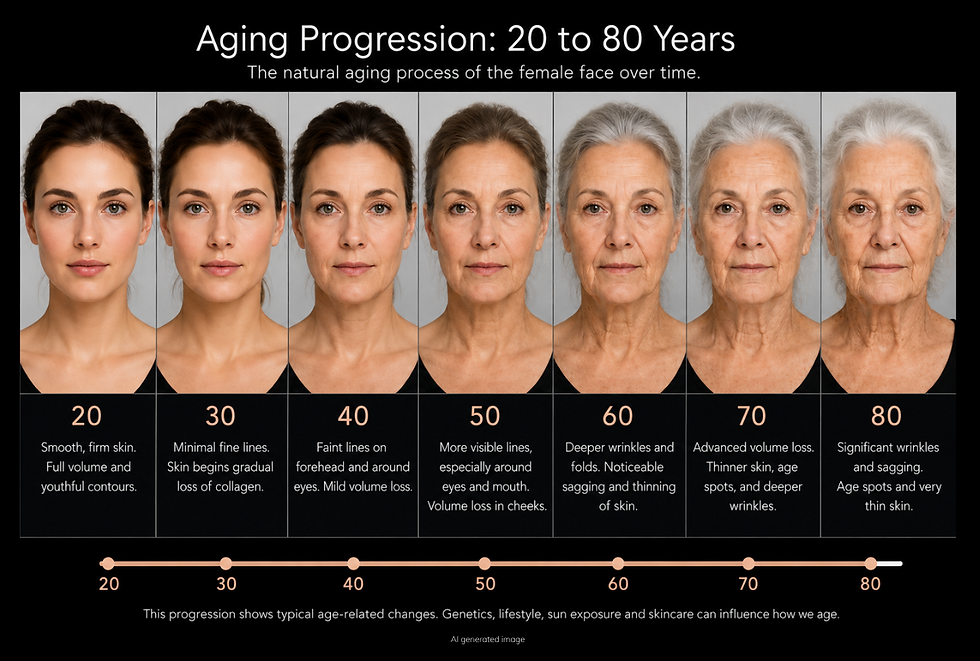
We spend a lot of time talking about how our skin, our faces and our bodies change with age. But our inner landscape shifts too. Sometimes, what looks like a life becoming smaller is actually a life becoming more intentional and aligned with who you are now, rather than who you once were. And that’s a kind of growth we don’t talk about nearly enough.


Comments